The Only Relationship Advice Books That Actually Work (According to Science, Not Vibes)
Let’s be honest for a second. Walking into the self-help section of a bookstore—or scrolling through the “Relationships” category on Amazon—can feel a little embarrassing.
There’s a stigma attached to it. It implies things are “broken.” It implies you don’t know what you’re doing.
But here is the reality: Nobody knows what they are doing. We don’t take “Marriage 101” in high school. We model our relationships after our parents (for better or worse), wing it based on bad rom-coms, and then wonder why we are arguing about the proper way to load the dishwasher for the 400th time.
If you are looking for relationship advice books, you don’t need fluffy platitudes about “following your heart.” You need manuals. You need psychology. You need the mechanics of why you fight and how to stop.
I have read the library so you don’t have to. I’ve skipped the outdated “Men are from Mars” stereotypes and filtered for the heavy hitters—the books backed by clinical research and neuroscience.

Here are the 7 relationship advice books that will actually change your life, categorized by what you’re trying to fix.
The “Holy Grail” of Relationship Science
1. The Seven Principles for Making Marriage Work
Author: Dr. John Gottman and Nan Silver
Best For: Couples who want a roadmap backed by hard data.
If you only read one book on this list, make it this one. Dr. John Gottman is the godfather of relationship science. He didn’t just guess what makes couples happy; he built a “Love Lab” at the University of Washington and watched couples for decades. He hooked them up to heart monitors, watched them argue, and tracked them for years.
He can predict divorce with over 90% accuracy. That is scary, but it means his advice is gold.
The Big Takeaway:
Most people think “communication” is the key. Gottman says that’s only half true. The real key is friendship and “Love Maps.” The couples who stayed together knew the intimate details of each other’s lives (who is their boss annoying them today? what is their favorite way to relax?).
He also introduces the “Four Horsemen of the Apocalypse”—the four behaviors that guarantee a breakup:
- Criticism (Attacking character)
- Contempt (Rolling eyes, mocking—this is the worst one)
- Defensiveness (The “Yes, but…” game)
- Stonewalling (Shutting down)
Why it works: It’s not about grand gestures. It’s about small shifts. It teaches you how to fight without destroying the relationship.
- Authority Link: The Gottman Institute Research
The Book for When You’ve Lost the Spark
2. Mating in Captivity: Unlocking Erotic Intelligence
Author: Esther Perel
Best For: Long-term couples who love each other but have stopped touching.
Esther Perel is the rockstar of modern therapy. While Gottman focuses on safety and friendship, Perel tackles the elephant in the room: Why does good sex vanish in happy marriages?
Her thesis is controversial but mind-blowing: Intimacy requires closeness, but desire requires distance.
We spend our relationships trying to get closer, to know everything about our partner, to feel safe. But “safety” is the enemy of “eroticism.” You don’t desire what you already have; you desire what is slightly out of reach.
The Big Takeaway:
If you want to bring the spark back, you don’t need more “cuddle time.” You need to see your partner as a separate individual again. You need to see them in their element—shining at a party, working hard at their job—where they aren’t just “yours.”
Read this if: You feel like roommates who manage a household together, rather than lovers.
The Book for Understanding Why You Argue
3. Hold Me Tight: Seven Conversations for a Lifetime of Love
Author: Dr. Sue Johnson
Best For: Couples who have the same fight over and over again.
You know that fight you have? The one that starts about the trash, turns into a fight about respect, and ends with one of you sleeping on the couch?
Dr. Sue Johnson explains that this isn’t a fight about trash. It is a “Demon Dialogue.”
Johnson is the creator of Emotionally Focused Therapy (EFT). She argues that adults have attachment needs just like children. When we fight, we are really asking one primal question: “Are you there for me? Do I matter to you?”

The Big Takeaway:
Most fights are a “Protest Dance.” One partner (usually the anxious one) pursues and criticizes to get a reaction. The other partner (usually the avoidant one) withdraws to keep the peace. The more she pushes, the more he pulls away. The more he pulls away, the more she pushes.
Hold Me Tight teaches you to stop the dance and say what you actually feel: “I’m not mad about the dishes; I’m scared that I’m doing this life alone.”
The Book for Understanding Your Own Baggage
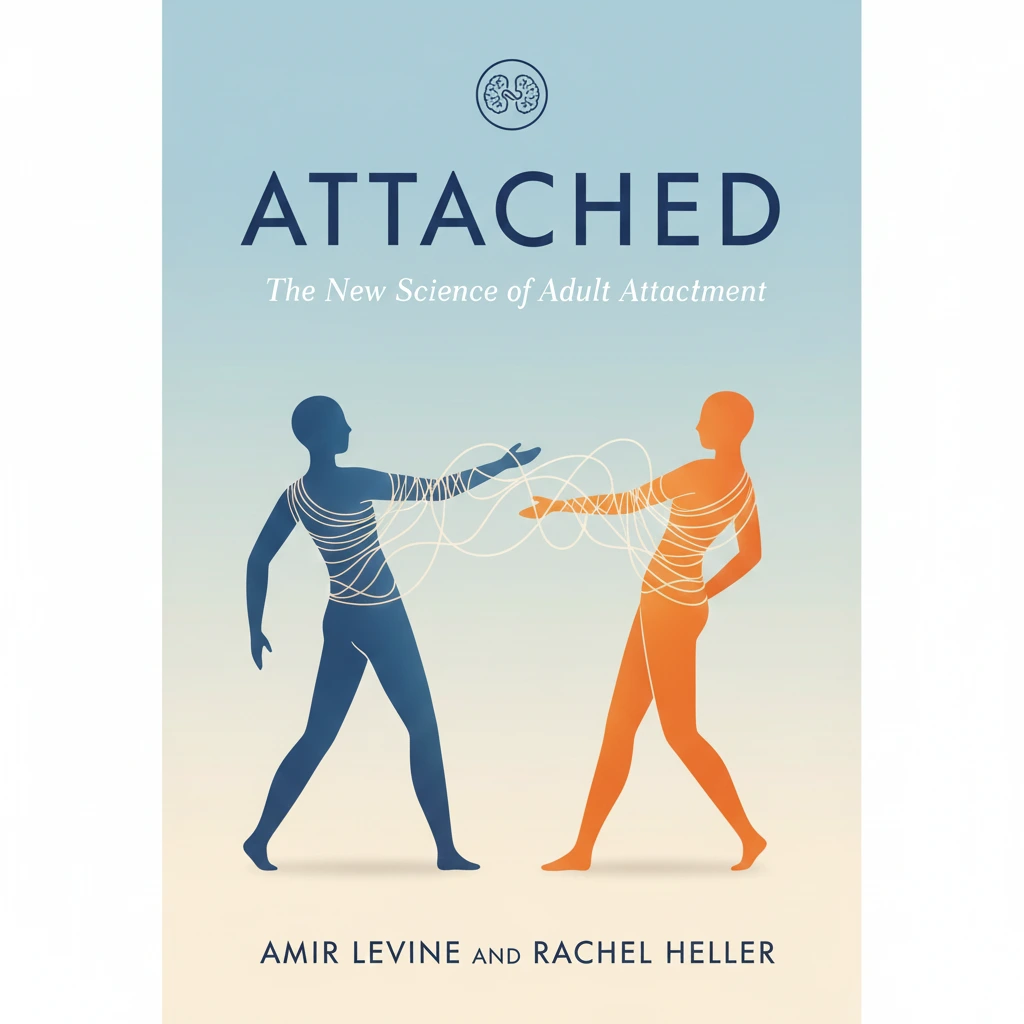
4. Attached: The New Science of Adult Attachment
Author: Amir Levine and Rachel Heller
Best For: People who are dating, or wondering why they act “crazy” in relationships.
Have you ever wondered why you panic when he doesn’t text back? Or why you feel suffocated when she wants to hang out three nights in a row?
It’s not you. It’s your Attachment Style.
This book brought Attachment Theory out of the clinic and into the mainstream. It categorizes people into three main buckets:
- Anxious: Craves intimacy, fears abandonment, needs constant reassurance.
- Avoidant: Values independence, fears engulfment, pulls away when things get serious.
- Secure: Comfortable with intimacy and independence.
The Big Takeaway:
The most common (and toxic) pairing is the Anxious-Avoidant trap. The anxious person chases, the avoidant person runs. It creates a rollercoaster of highs and lows that feels like “passion” but is actually just anxiety.
This book is essential for understanding your own wiring so you don’t sabotage a good thing (or stay in a bad thing too long).
The Book for Female Desire (That Men Should Read Too)
5. Come As You Are
Author: Emily Nagoski, Ph.D.
Best For: Understanding why your sex drive doesn’t work like a light switch.
This is technically a book about female sexuality, but it is one of the best relationship advice books on the market for couples.
Nagoski uses science to debunk the idea that low libido is “broken.” She introduces the concept of the Dual Control Model:
- The Accelerator: Things that turn you on.
- The Brakes: Things that turn you off (stress, body image, dirty laundry, work emails).

The Big Takeaway:
Most couples try to have more sex by hitting the accelerator (lingerie, date nights). But for many women, the “Brakes” are too sensitive. If she is stressed about the kids or work, the brake is jammed to the floor. No amount of “accelerator” will move the car.
You don’t need more foreplay; you need less stress. You need to release the brakes.
The Cheat Sheet: Which Book Do You Need Right Now?
If you don’t have time to read five books, use this table to diagnose your relationship and pick your prescription.
| If your relationship feels like… | You are fighting about… | You need to read… |
| A war zone | Criticism, defensiveness, and “who is right” | The Seven Principles (Gottman) |
| A quiet roommate arrangement | Nothing, but you never touch | Mating in Captivity (Perel) |
| A rollercoaster | “Why didn’t you text me?” / “I need space” | Attached (Levine) |
| A broken record | The same issue for 10 years | Hold Me Tight (Johnson) |
| A biology class gone wrong | “I’m just never in the mood” | Come As You Are (Nagoski |
Rediscovering Intimacy: How to Comfortably Become Sexually Active Again
6. The Communication Bible
Nonviolent Communication: A Language of Life
Author: Marshall B. Rosenberg
Best For: Learning how to ask for what you want without starting a fight.
The title sounds a little hippie-dippie, I know. But the content is like a Navy SEAL manual for negotiation.
Most of us communicate with “violent” language without knowing it. We diagnose (“You’re lazy”), we judge (“That was rude”), and we demand.
Rosenberg teaches a four-step process:
- Observation: State the facts without judgment. (“I see two dirty socks on the floor.”)
- Feeling: State how you feel. (“I feel frustrated.”)
- Need: State the universal human need. (“Because I have a need for order and support in the house.”)
- Request: Ask for a specific action. (“Would you be willing to put them in the hamper before you leave?”)
It sounds robotic at first. But once you master it, it is a superpower. It removes the “blame” from the conversation, which stops your partner from getting defensive.
7. The Book on Boundaries
Set Boundaries, Find Peace
Author: Nedra Glover Tawwab
Best For: People who resent their partners because they can’t say “No.”
This is a newer entry to the canon, but it has quickly become a classic.
Many relationship problems are actually boundary problems. You say “yes” to visiting his parents when you want to say “no,” and then you punish him for it by being grumpy all weekend. You agree to budget terms you hate, and then secretly spend money.
Tawwab, a licensed therapist, explains that boundaries are not walls; they are doors. They tell people how to interact with us safely.
The Big Takeaway:
If you are feeling resentment, you are lacking a boundary. This book gives you the actual scripts—word for word—on how to tell your partner (and your in-laws) what you need, without apologizing for it.
- Authority Link: Nedra Tawwab’s Guide to Boundaries
How to Actually Use These Books (Don’t Just Shelf Them)
Buying the book gives you a dopamine hit. Reading the book gives you knowledge. Doing the work gives you a relationship.
Here is the trap: One person reads the book and then uses it as a weapon against the other person.
“Well, Dr. Gottman says you are Stonewalling, so technically you are ruining this marriage.”
Do not do this.
The Strategy for Success:
- Audiobooks are your friend. If your partner isn’t a reader, listen to the audiobook together on a long drive. It’s less pressure.
- The “Book Club” Method. Agree to read one chapter a week. On Sunday morning over coffee, discuss just that one chapter.
- The Highlight Rule. If you read the physical book first, highlight the parts where you need to improve, not the parts where they need to improve. Hand them the book and say, “I realized I do this thing on page 42. I’m sorry.”
- Vulnerability begets vulnerability. If you own your mess, they will likely own theirs.
Final Thoughts
Relationships are living things. They require feeding, watering, and occasional pruning.
If you are struggling, you aren’t failing. You are just untrained. We expect ourselves to be experts at love, co-habitation, and conflict resolution based on zero training.
Pick one of these relationship advice books. Just one. Commit to the concepts inside. You will be shocked at how quickly the dynamic changes when just one person decides to change the dance steps.
Which of these books speaks to your current struggle? Are you in the “Roommate Phase” (Perel) or the “War Zone” (Gottman)?