Let’s be real for a moment. When people talk about menopause, they usually mention the hot flashes, the mood swings, and maybe the sleep loss. But rarely do we sit down and have an honest conversation about what happens in the bedroom.
For many women, menopause feels like a betrayal. Just when you might have more time for yourself or your partner, your body decides to rewrite the rules. You might feel disconnected from your own skin, or perhaps intimacy has shifted from a source of pleasure to a source of anxiety—or even pain.
If you are reading this on Seduce.pro, you are likely looking for more than just medical definitions. You want to know how to get your groove back. You want to know why your body is changing and how to navigate this new chapter with confidence and pleasure intact.
This guide isn’t just about surviving “the change.” It’s about thriving in it. We’re going to tackle the awkward questions, the physical hurdles, and the actionable solutions—from diet plans to natural treatments—that can help you reclaim your intimacy.
The Landscape: Understanding the Stages of Menopause
Before we can fix the problems, we have to understand the terrain. Confusion is common because menopause isn’t a single day on the calendar; it’s a journey.
The stages of menopause are generally broken down into three phases:
- Perimenopause: The “wild west” of hormones. This can start 8 to 10 years before menopause. Your periods get erratic, and your libido might spike and crash like a stock market chart.
- Menopause: This is technically just one day. It is the day you mark exactly 12 months since your last period.
- Postmenopause: The rest of your life. Hormones stabilize at a lower level, but this is often where the physical changes affecting sex (like dryness) become most persistent.
Do You Need a Menopause Test?
Many women write to us asking about a menopause test. You might see kits at the pharmacy that promise to tell you if you’re “in it.” These tests usually measure Follicle Stimulating Hormone (FSH).
Here is the truth: While a high FSH level is a clue, it’s not a definitive diagnoser because your hormones fluctuate so violently during perimenopause. A test might say “yes” on Monday and “no” on Thursday. Instead of peeing on a stick, pay attention to your body’s signals—the hot flashes, the cycle changes, and the libido shifts are usually better indicators than any drugstore kit.
How to pick up your neighborhood girl
The Silent Mood Killers: Physical Barriers to Intimacy
You expect vaginal dryness. But nobody warns you that your shoulder might lock up, making missionary position agony, or that your actual anatomy might change shape.
Frozen Shoulder Menopause
It sounds bizarre, but there is a strong link between frozen shoulder menopause symptoms and hormonal drops. Estrogen is a potent anti-inflammatory. When it leaves the building, your joint capsules can tighten and inflame.
How does this kill intimacy? If you can’t raise your arms above your head or support your weight without shooting pain, your repertoire of positions shrinks. You might pull away from a hug because your shoulder aches.
- The Intimacy Fix: Don’t power through. Use pillows for support during sex to take the weight off your joints. More importantly, see a physical therapist. This is treatable, but ignoring it leads to months of unnecessary stiffness.
Labia Minora Menopause Changes
This is the topic most women are too embarrassed to bring up with their doctors, let alone their partners. Low estrogen causes a condition called vulvovaginal atrophy. This can cause the labia minora menopause effect: the inner lips of the vulva can thin, shrink, or sometimes retreat almost entirely.
Why does this matter for sex? The labia minora play a role in protecting the vaginal opening and contributing to sensation. When they thin out, friction becomes an enemy. What used to feel like a pleasurable touch can feel like sandpaper.
- The Intimacy Fix: Lube is non-negotiable, but you may also need a localized estrogen cream (which stays in the tissue and doesn’t go into your bloodstream) to “plump” the tissue back up. This can be a game-changer for restoring sexual comfort.
The Complex Case: Endometriosis, HRT, and Menopause
If you spent your fertile years battling endometriosis, you might have prayed for menopause to stop the pain. But for women with severe menopausal symptoms who want to take Hormone Replacement Therapy (HRT) to save their sex drive, it gets tricky.
The relationship between endometriosis hrt menopause is delicate. Endometriosis feeds on estrogen. The fear is that taking estrogen-only HRT could “wake up” old lesions, causing pelvic pain to return right when you thought you were free.
- The Strategy: Leading experts suggest that women with a history of endometriosis usually need combined HRT (estrogen + progesterone), even if they have had a hysterectomy. The progesterone helps keep any rogue endometriosis tissue dormant while the estrogen helps with lubrication, mood, and libido. Always consult a specialist for this specific cocktail.
Fueling Your Desire: The Menopause Diet 5 Day Plan to Lose Weight
Let’s talk about confidence. It is hard to feel sexy when you feel bloated, sluggish, or like you’re gaining weight just by looking at a bagel. The “meno-belly” is real, caused by a shift in how your body handles insulin and cortisol.
You need energy for intimacy. This menopause diet 5 day plan to lose weight isn’t about starvation; it’s about reducing inflammation and stabilizing blood sugar so your libido has a fighting chance to surface.
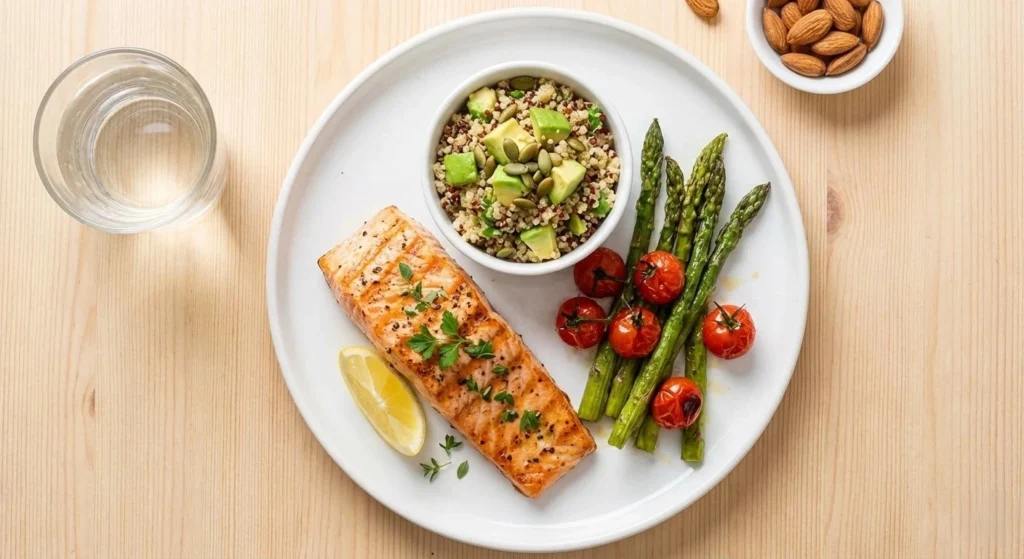
The Core Principle: High Protein + Healthy Fats + Fiber. Cut the processed sugar that kills your sex drive.
- Day 1: The Anti-Bloat Start
- Breakfast: Scrambled eggs with spinach (magnesium for relaxation).
- Lunch: Grilled chicken salad with olive oil and avocado.
- Dinner: Baked Salmon with asparagus.
- Snack: Handful of almonds.
- Day 2: Phytoestrogen Boost
- Breakfast: Greek yogurt with flaxseeds (flax mimics weak estrogen).
- Lunch: Lentil soup.
- Dinner: Stir-fry tofu with broccoli and ginger.
- Day 3: Gut Health
- Breakfast: Smoothie with berries, protein powder, and chia seeds.
- Lunch: Quinoa bowl with chickpeas and cucumber.
- Dinner: Turkey burger (no bun) with a side of roasted Brussels sprouts.
- Day 4: Low Carb Clarity
- Breakfast: Omelet with mushrooms and onions.
- Lunch: Tuna lettuce wraps.
- Dinner: Steak or heavy mushroom steak with green beans.
- Day 5: The Hydration Finish
- Breakfast: Oatmeal with walnuts.
- Lunch: Mixed green salad with sardines or grilled shrimp.
- Dinner: White fish steamed with bok choy.
Why this works for intimacy: By day 5, the reduction in bloating and sugar crashes usually results in higher energy levels. When you don’t feel “heavy,” you’re more likely to initiate touch.
7 Natural Menopause Treatments That Really Work
Not everyone can take hormones, and not everyone wants to. If you are looking to boost your vitality naturally, here are 7 natural menopause treatments that really work:
- Black Cohosh: The heavyweight champion of herbal remedies. Studies suggest it helps with hot flashes and mood irritability, making you easier to be around (and be with!).
- Maca Root: This Peruvian root is legendary for libido. While it doesn’t change hormone levels, it boosts sexual desire and energy in many women.
- Vaginal Moisturizers (with Hyaluronic Acid): Note: this is different from lubricant. Moisturizers are applied every few days to keep tissues hydrated all the time, not just during sex.
- Strength Training: Lifting weights increases testosterone naturally (yes, women need it too for libido) and combats the muscle loss that slows metabolism.
- Mindfulness-Based Stress Reduction (MBSR): Stress kills arousal. MBSR has been proven to reduce the “bother” of hot flashes and lower cortisol, opening the door for intimacy.
- Vitamin D & K2: Essential for bone health, but also mood regulation. Low Vitamin D is linked to low libido and depression.
- Pelvic Floor Therapy: If sex hurts, or if you have bladder leaks (a major mood killer), a pelvic floor therapist can teach you how to relax tight muscles and strengthen weak ones.
The Light at the End of the Tunnel: What Signals the End of Menopause?
The most common question is: “When will I feel normal again?”
What signals the end of menopause is biologically the cessation of periods for 12 months. However, the end of the symptoms is what we really care about.
For most women, the intense “brain fog” and volatile mood swings tend to settle within a few years post-menopause. This period is often called the “Second Spring” in Eastern medicine. Once the hormonal chaos subsides, many women report a “Postmenopausal Zest”—a newfound energy and creative freedom.

In terms of sexuality, once you manage the local symptoms (dryness/atrophy), you may find that sex becomes better. No fear of pregnancy, no period logistics—just connection.
Conclusion
Menopause changes your body, but it does not have to end your sex life. It demands a new toolkit. It requires you to be vocal about pain (like that frozen shoulder), proactive about tissue health (watch those labia minora changes), and kind to your metabolism (try the diet plan).
Intimacy after menopause is less about spontaneous fireworks and more about deep, cultivated embers. It can be hotter than before, but you have to tend the fire differently.
Take a breath. You aren’t broken; you’re just evolving.
Next Step: Would you like a guide on “How to talk to your partner about painful sex without killing the mood”?
Sources & Further Reading
Harvard Health Publishing: Natural remedies for hot flashes and libido. health.harvard.edu
The North American Menopause Society (NAMS): The leading authority on menopause management and sexual health. menopause.org
Mayo Clinic: Guidance on Frozen Shoulder and Menopause Symptoms. mayoclinic.org
Endometriosis UK: Information on managing Endometriosis during and after menopause. endometriosis-uk.org