
Sexual health is a topic that often lives in the shadows—whispered about in doctors’ offices or frantically Googled in the privacy of an “Incognito” browser tab. Yet, it is one of the most fundamental aspects of our overall well-being. According to the World Health Organization, sexual health is not merely the absence of disease, dysfunction, or infirmity. It is a state of physical, emotional, mental, and social well-being in relation to sexuality.
When things go wrong in the bedroom, it’s easy to feel isolated or “broken.” But the reality is that sexual health problems are incredibly common, affecting millions of men, women, and non-binary individuals worldwide. They are not character flaws; they are medical and psychological issues that deserve attention and care.
This guide aims to demystify these challenges, breaking down the physical and psychological barriers to a healthy sex life and offering actionable paths toward healing.
The Silence and The Stigma
Why is it so hard to talk about sexual health? We live in a world saturated with sexual imagery, yet we lack the vocabulary to discuss sexual function.
When a person has a persistent backache, they tell their partner. They see a specialist. They get physical therapy. When a person experiences erectile dysfunction or painful intercourse, they often suffer in silence for years. The shame associated with sexual dysfunction can be paralyzing, leading to relationship breakdowns and a plummeting sense of self-worth.
The first step in understanding sexual health problems is acknowledging that your body is a machine, and sometimes machines need maintenance.
Categories of Sexual Dysfunction
Sexual health problems generally fall into four main categories. While these can overlap, understanding the distinctions helps in identifying the root cause.
1. Desire Disorders (Libido)
This refers to a lack of interest in sex or a lower-than-usual desire. It is the most common sexual complaint among women, though it affects men frequently as well.
- Hypoactive Sexual Desire Disorder (HSDD): This is a chronic lack of interest in sex that causes personal distress. It’s not just “not being in the mood” occasionally; it is a persistent absence of sexual fantasies and desire.
- The Cause: Often a cocktail of hormonal imbalances (low testosterone or estrogen), mental health struggles (depression, anxiety), or relationship dissatisfaction.
2. Arousal Disorders
This is when the mind is willing, but the body doesn’t get the memo.
- For Men: The most common form is Erectile Dysfunction (ED)—the inability to achieve or maintain an erection suitable for intercourse.
- For Women: This often manifests as an inability to become lubricated or a lack of blood flow to the genitals, making sex uncomfortable or impossible.
3. Orgasm Disorders
This involves a persistent delay in or absence of orgasm following a normal sexual excitement phase.
- Anorgasmia: The inability to climax. This is common in women but can also affect men (often as “delayed ejaculation”).
- Premature Ejaculation (PE): Occurring when ejaculation happens sooner than the partner or the individual would like. It is largely a psychological or nervous system response that can be retrained.
4. Pain Disorders
Sex should not hurt. If it does, the body is signaling a problem.
- Dyspareunia: The clinical term for painful intercourse.
- Vaginismus: A condition where the vaginal muscles spasm involuntarily, making penetration painful or impossible.
- Peyronie’s Disease: In men, scar tissue inside the penis causes curved, painful erections.
The Physical Culprits: It’s Not “All in Your Head”
While the brain is a major sex organ, many sexual health problems are strictly physiological. Treating them requires a medical approach, not just “thinking positive thoughts.”
Cardiovascular Health
The penis is often called the “dipstick” of the body’s vascular health. An erection is a hydraulic event; it requires strong blood flow. Consequently, ED is often an early warning sign of heart disease, high blood pressure, or clogged arteries. If blood can’t get to the penis, it might be struggling to get to the heart.
Diabetes
High blood sugar damages blood vessels and nerves over time. For men, this can lead to ED. For women, it can result in decreased lubrication and reduced sensation, making orgasm difficult. The American Diabetes Association notes that sexual dysfunction is prevalent in both Type 1 and Type 2 diabetes but is often under-discussed in routine checkups.
Hormonal Imbalances
Hormones are the fuel for the sexual engine.
- Testosterone: Vital for libido in both men and women. Levels naturally decline with age, but a sharp drop can kill drive completely.
- Estrogen: Essential for vaginal elasticity and lubrication. During menopause or postpartum, drops in estrogen can cause significant pain and atrophy.
- Thyroid Issues: Both hyperthyroidism and hypothyroidism can wreak havoc on libido and ejaculation timing.
Medications
Ironically, the medications we take to stay healthy often sabotage our sex lives.
- Antidepressants (SSRIs): notorious for dampening libido and causing delayed orgasm.
- Antihistamines: Can dry out mucous membranes (including vaginal tissues).
- Blood Pressure Meds: Some beta-blockers can interfere with erections.
Note: Never stop taking medication without consulting your doctor. Often, a simple switch to a different brand or dosage can alleviate these side effects.
The Psychological Factors: The Brain-Body Loop
You cannot separate the mind from the genitals. Stress, anxiety, and past trauma are powerful “brakes” on the sexual response cycle.
Performance Anxiety
This creates a self-fulfilling prophecy. A man worries he won’t get an erection; the anxiety releases adrenaline (which constricts blood vessels); he doesn’t get an erection; he worries more next time. Breaking this loop often requires Cognitive Behavioral Therapy (CBT) or mindfulness techniques to move the focus from “performance” to “sensation.”
Body Image
If you are constantly critiquing your stomach, thighs, or hairline, you are distracted. This distraction pulls you out of the moment. You are “spectatoring”—watching yourself have sex rather than experiencing it.
Relationship Issues
Resentment is the ultimate libido killer. If you don’t feel heard or respected by your partner outside the bedroom, your body is unlikely to open up to them inside the bedroom. Unresolved conflict often manifests as a “low sex drive” that is actually just a “low tolerance for this specific partner.”
Sexually Transmitted Infections (STIs)
No guide on sexual health is complete without addressing STIs. They are arguably the most preventable sexual health problem, yet stigma keeps people from testing.
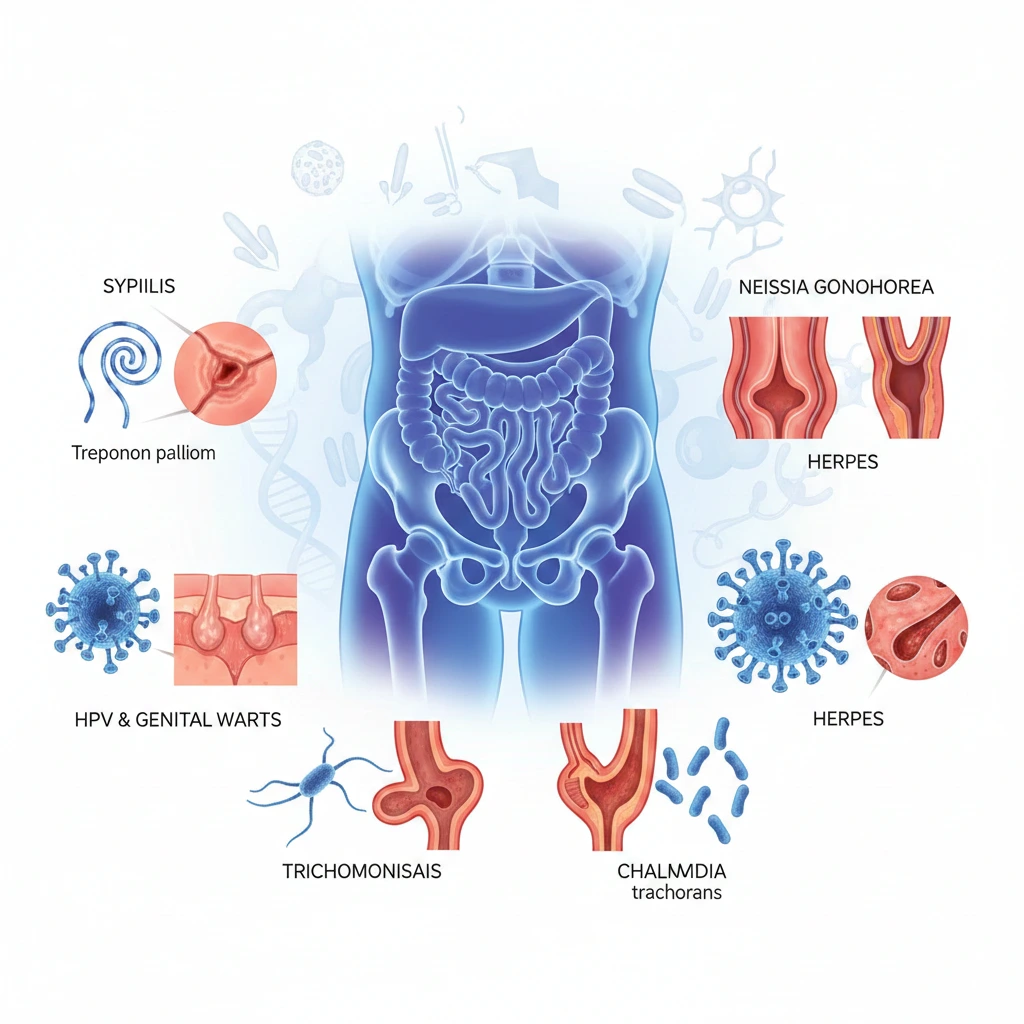
STIs like Chlamydia, Gonorrhea, and HPV are often asymptomatic, meaning you can have them (and spread them) without knowing. Left untreated, they can lead to Pelvic Inflammatory Disease (PID) in women, which causes chronic pain and infertility.

- The Action Plan: Regular testing is not a sign of promiscuity; it is a sign of responsibility. Resources like Planned Parenthood offer confidential testing and treatment.
When to See a Doctor (and Which One?)
Knowing you have a problem is step one. Knowing who to call is step two.
- General Practitioner (GP): Start here. They can run blood panels (for hormones, diabetes, cholesterol) and check for basic physical issues.
- Urologist: The specialist for the male reproductive system (and urinary tract). They are the experts on ED, Peyronie’s, and prostate issues.
- Gynecologist (OB/GYN): The specialist for female reproductive health. They address pain, dryness, and structural issues.
- Pelvic Floor Physical Therapist: An often overlooked hero of sexual health. They treat vaginismus, painful intercourse, and incontinence by retraining the muscles of the pelvic floor.
- Sex Therapist: A mental health professional (psychologist or counselor) who specializes in the psychological aspects of sex. They are crucial for dealing with trauma, mismatch in desire, and performance anxiety. The AASECT directory is a gold standard for finding certified professionals.
Lifestyle Changes That actually Work
Before you reach for a prescription, look at your lifestyle. Your penis or clitoris does not operate independently of the rest of your body.
- Sleep: Testosterone is produced largely during REM sleep. If you are sleeping 5 hours a night, you are chemically castrating yourself.
- Alcohol: Shakespeare said it best about alcohol: “It provokes the desire, but it takes away the performance.” Chronic heavy drinking damages nerves and lowers testosterone.
- Smoking: Smoking damages the lining of your blood vessels. If you smoke, you are essentially clamping down the hose that fills the erection.
- Exercise: Cardio improves blood flow. Strength training boosts testosterone. Yoga reduces stress. All three are better than most aphrodisiacs.
Understanding the Emotional Landscape: How Girls Feel During Romance
Conclusion: Reclaiming Your Narrative
Sexual health problems are not a life sentence. We live in a golden age of treatment options, from Viagra and Cialis to hormone replacement therapies, high-tech pelvic floor biofeedback, and evidence-based sex therapy.
If you are struggling, please know this: You are not alone, and you are not broken. Your body is simply signaling that it needs support. By addressing these issues head-on—with curiosity rather than shame—you can rediscover a sex life that is healthy, safe, and fulfilling.
The road to recovery starts with a simple, brave conversation. Whether that is with your partner or your doctor, make today the day you break the silence.