The Real Talk: Essential Relationship Advice for Women That Actually Works
Let’s be honest for a second. If you Googled relationship advice for women, you’re probably tired.
Maybe you’re tired of the “dating games” where you have to pretend you aren’t interested to keep someone interested. Maybe you’re exhausted by the mixed signals, the ghosting, or the “situation-ships” that never quite turn into relationships. Or, perhaps you are in a long-term partnership that feels like it’s lost its pulse, and you’re the only one trying to perform CPR on the romance.
The internet is flooded with advice telling you to “be a goddess,” “lean back,” or “act like a prize.” While well-intentioned, a lot of this advice treats relationships like a strategy game to be won rather than a human connection to be nurtured.
We’re going to strip away the fluff. This isn’t about how to trick someone into loving you. It’s about building a foundation of self-respect, understanding emotional dynamics, and creating a love that actually fits your life—not just your Instagram feed.
Here is your no-nonsense guide to navigating love, dating, and long-term commitment.
1. The “You” Factor: Why Self-Love Isn’t Just a Cliché
It sounds like a bumper sticker, but it is the absolute bedrock of relationship psychology: You teach people how to treat you.
If you are constantly bending over backward to accommodate a partner’s schedule, apologizing for having feelings, or accepting crumbs of affection because you’re starving for connection, you are setting a dangerous precedent. You are silently telling your partner (and yourself) that your needs are secondary.
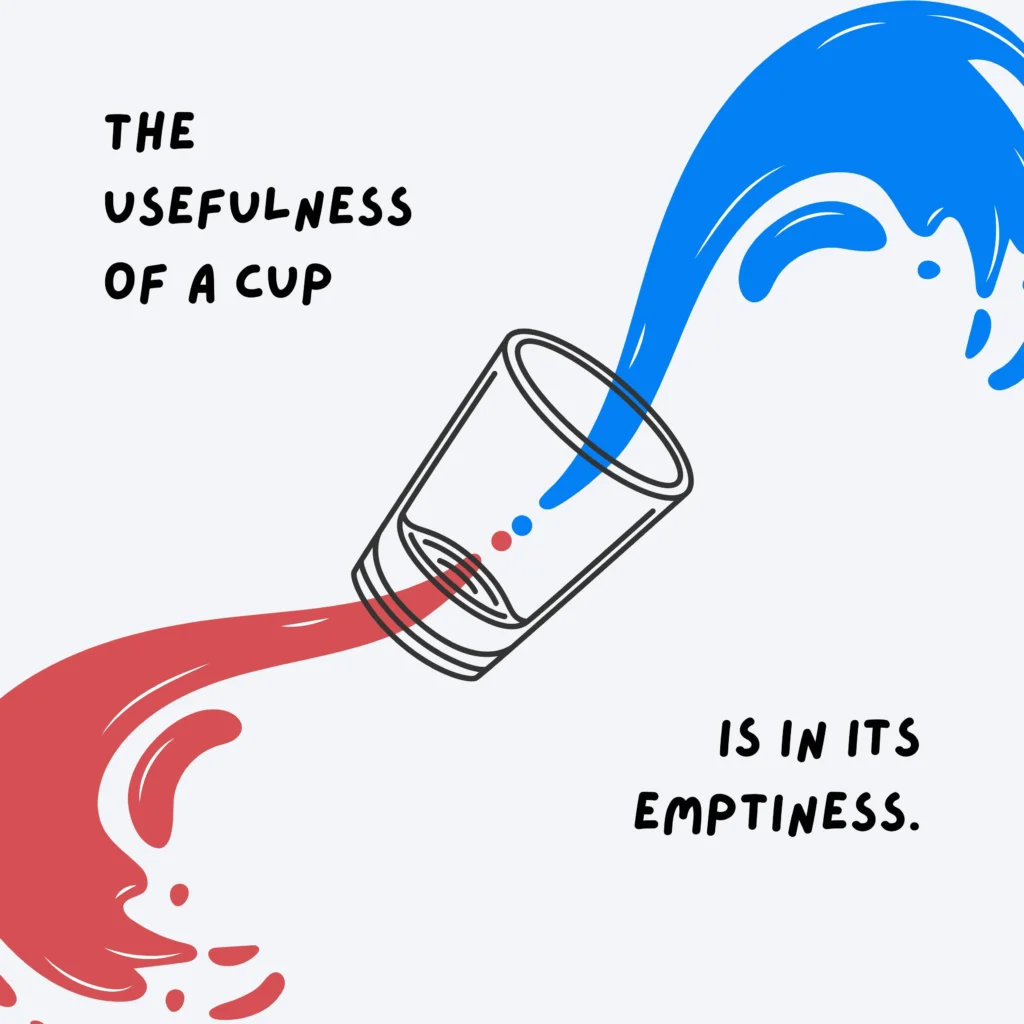
The “Empty Cup” Theory
You cannot pour from an empty cup. If you enter a relationship looking for your partner to fill your voids—your insecurity, your loneliness, your need for validation—you place an impossible burden on them. Eventually, they will buckle under the weight, or you will become resentful that they aren’t “fixing” you.
The Fix: Build a life so good that a relationship is just the cherry on top, not the whole sundae.
- Keep your hobbies: Don’t drop your pottery class just because he’s free on Tuesday nights.
- Maintain your friendships: Your girlfriends were there before him, and they’ll be there after him. Never isolate yourself.
- Check your self-talk: Would you let a man speak to your best friend the way you let him speak to you? If the answer is no, why is it okay for you?
Authority Insight: According to research byPsychology Today, self-compassion is strongly linked to relationship satisfaction. When you are kind to yourself, you are less likely to project your insecurities onto your partner.
2. Ditching the “Spark” Myth (And What to Look for Instead)
We have been conditioned by Hollywood to believe that love should feel like a lightning strike. We chase the butterflies, the anxiety, the obsession.
Here is a hard truth: Sometimes, “the spark” is just anxiety.
When you meet someone and you feel sick to your stomach, you can’t eat, and you’re constantly checking your phone—that is often your nervous system reacting to uncertainty. It’s a cortisol spike, not necessarily a soulmate connection.
The Honest Guide to Relationship Advice for Men: 10 Actually Works Advices
The Slow burn vs. The Explosion
Healthy love often feels… boring. At first. It feels calm. It feels safe. It doesn’t leave you wondering where you stand. Many women mistake this lack of drama for a lack of chemistry.
Actionable Advice: Give the “nice guy” (who might seem a little quiet) a second date. Look for consistency over intensity. Intensity burns out; consistency builds a life.
3. Communication: The Art of Not “Hinting”
If there is one piece of relationship advice for women that could save 90% of arguments, it is this: Men are not mind readers. Stop hinting.
We often fall into the trap of thinking, “If he loved me, he would just know that I want him to do the dishes/plan the date/hug me right now.”
This is a setup for failure. People have different upbringing, different observation skills, and different emotional baselines. Expecting your partner to intuit your needs is a fast track to resentment.
The “Direct Request” Technique
Instead of passive-aggressive sighs or saying “I’m fine” when you aren’t, try direct, non-attacking requests.
- Don’t say: “You never take me out anymore.” (This is an attack).
- Do say: “I’ve been feeling a little disconnected lately. I would really love it if you planned a date night for us this Friday. It would make me feel really special.”
See the difference? The first starts a fight; the second offers a solution and a roadmap to winning.
Authority Insight: TheGottman Institute, famous for their “Love Lab,” found that the presence of “The Four Horsemen” (Criticism, Contempt, Defensiveness, and Stonewalling) predicts divorce with over 90% accuracy. “Criticism” is often the first horseman. Frame your complaints as needs, not attacks.
4. Understanding Attachment Styles
Have you ever wondered why you pull away when things get serious? Or why you panic when he takes three hours to text back? This is likely your Attachment Style at work.
Understanding this is like having a cheat code for your love life.
- Anxious Attachment: You crave intimacy but constantly fear abandonment. You need lots of reassurance.
- Avoidant Attachment: You value independence above all. When things get too emotional, you shut down or run away.
- Secure Attachment: You are comfortable with intimacy and independence. You don’t play games.
The Trap: Anxious women are frequently attracted to Avoidant men. It’s the “anxious-avoidant trap.” The anxious person chases, and the avoidant person runs, creating a cycle of drama that feels like passion but is actually dysfunction.
The Advice: Identify your style. If you are Anxious, you need a partner who is consistent and reassuring (usually a Secure partner). Stop trying to convert an Avoidant partner into a Secure one; it rarely works without years of therapy.
5. Red Flags vs. Pink Flags vs. Deal Breakers
In the early stages of dating, we often wear rose-colored glasses. But as the saying goes, “When you wear rose-colored glasses, red flags just look like flags.”
The Definitive Red Flags (Run!)
- How he treats service staff: Is he rude to the waiter? He will eventually be rude to you.
- Love Bombing: Does he say “I love you” after two weeks? Does he want to move in immediately? This is often a sign of a narcissist trying to hook you before you see their real personality.
- The “Crazy Ex” Narrative: If all his exes are “crazy,” he is the common denominator.
The Pink Flags (Proceed with Caution)
These are things that can be worked on but need monitoring.
- He has a different spending style than you.
- He isn’t close with his family (this could be healthy boundaries, or it could be an inability to connect).
- He doesn’t have many long-term friends.
Knowing Your Deal Breakers
Write these down. Is it smoking? Kids? Religion? Politics? Do not compromise on your core values to keep a relationship. You can compromise on movies and pizza toppings; you cannot compromise on whether or not you want children.
6. The Masculine/Feminine Dynamic (It’s Not About Gender Roles)
Regardless of whether you are in a heteronormative relationship or not, every relationship has a polarity of energy.
Many modern women are high-achievers. We run boardrooms, manage finances, and juggle social calendars. We spend all day in our “Masculine” energy (doing, achieving, directing).
When we come home, if we stay in that “Manager Mode,” we end up micromanaging our partners. “Did you do the laundry? Why did you fold it that way? Let me just do it.”
The Shift: To cultivate desire and softness, practice dropping into your “Feminine” energy when you are with your partner. This doesn’t mean being weak; it means being receptive. It means allowing yourself to be taken care of.
Allow him to open the door. Allow him to plan the evening. If he offers to fix the sink, let him fix it (even if you could do it faster). When a partner feels needed and competent, their attraction to you grows. If you do everything, you leave no room for them to be a partner.
7. How to Fight Fair
You are going to fight. In fact, if you never fight, that’s actually a bad sign—it usually means one of you has given up and is just bottling things up.
The goal isn’t to avoid conflict; it’s to repair it.
The “Time-Out” Rule
When we get angry, our heart rate rises. Once it goes over 100 BPM, we enter “fight or flight” mode. The frontal lobe (logic) shuts down. You literally cannot think rationally.
If you are shouting in circles, stop. Say: “I am feeling flooded right now and I can’t be productive. I need a 20-minute break to calm down, and then we will finish this conversation.”
Go for a walk. Do not stew. Come back when you are calm. This single tip saves relationships from the things we say when we want to hurt each other.
8. Keeping the Intimacy Alive (It’s Not Just Sex)
For women, sex is often emotional. For men, sex is often how they connect emotionally. It’s a loop.
If you are resentful because he isn’t helping around the house, you won’t want sex. If he doesn’t get sex, he feels unloved and won’t want to help around the house.
The Solution: Non-Sexual Touch. Make physical contact a daily habit without the expectation of sex.
- A 20-second hug (releases oxytocin, the bonding hormone).
- Holding hands while watching TV.
- A kiss when you leave the house that lasts longer than a peck.
When you bridge the physical gap, the emotional gap often closes too.


Authority Insight:Brené Brown’s research on vulnerabilityhighlights that intimacy cannot exist without vulnerability. You must be willing to let your partner see the “messy” parts of you. If you are always perfect, you aren’t real.
9. The “Fixer” Mentality: Stop Parenting Your Partner
This is a massive trap for women. We see “potential.” We date the guy he could be, not the guy he is.
- “If I just help him get his resume together…”
- “If I just get him to go to therapy…”
- “If I just teach him how to dress…”
Stop.
You are his partner, not his mother, his therapist, or his life coach. When you try to “fix” a man, two things happen:
- He feels criticized and inadequate.
- You become exhausted and resentful.
The Golden Rule: Date the person standing in front of you right now. If he never changed a single thing about himself—his job, his habits, his emotional intelligence—would you still be happy? If the answer is no, let him go. You cannot love someone into changing.
10. Knowing When to Walk Away
Sometimes, the best relationship advice for women is simply the permission to leave.
We are often socialized to be the “nurturers,” the ones who stick it out and make it work. We fall victim to the Sunk Cost Fallacy: “We’ve been together five years, I can’t throw that away.”
Yes, you can.
If you have communicated your needs clearly, if you have tried therapy, if you have worked on your own toxic patterns, and things are still not changing—you are not failing by leaving. You are choosing yourself.
Better to be single and waiting for the right person, than married and lonely sitting next to the wrong one.
Final Thoughts: The High-Value Mindset
Ultimately, successful relationships aren’t about tricks. They are about two emotionally healthy people choosing each other every single day.
For the women reading this: Raise your standards.
Not your standards for his height or his wallet, but your standards for his character, his kindness, and his ability to communicate. Trust your intuition. It is usually right.
Love is supposed to add value to your life. It should be the place where you recharge, not the place where you drain your battery. Prioritize your peace, communicate your truth, and don’t settle for a love that requires you to abandon yourself.
Quick Summary Checklist for Healthy Love:
- Safety: Can you be your authentic self without fear of judgment?
- Trust: Do his actions match his words?
- Respect: Does he respect your boundaries, even when he doesn’t like them?
- Growth: Do you support each other’s individual dreams?
If you have these four, you have everything.